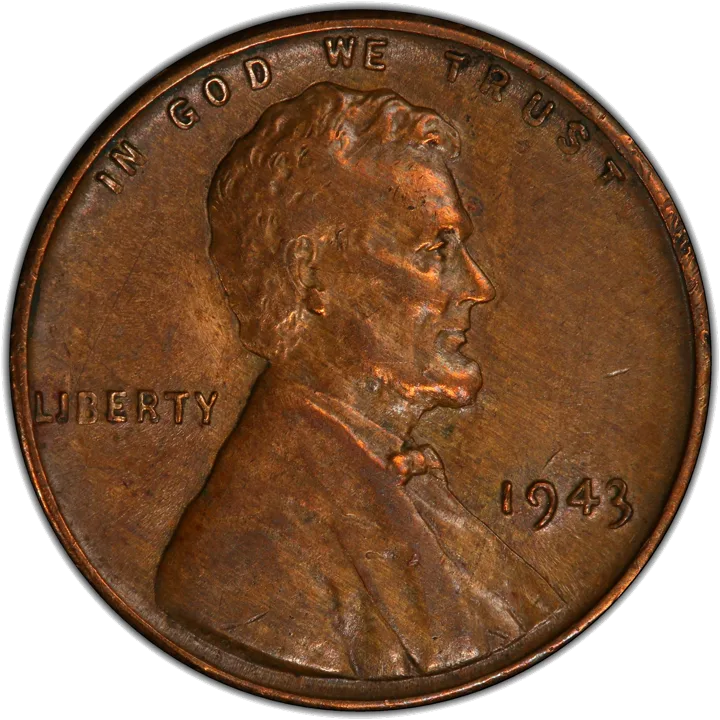
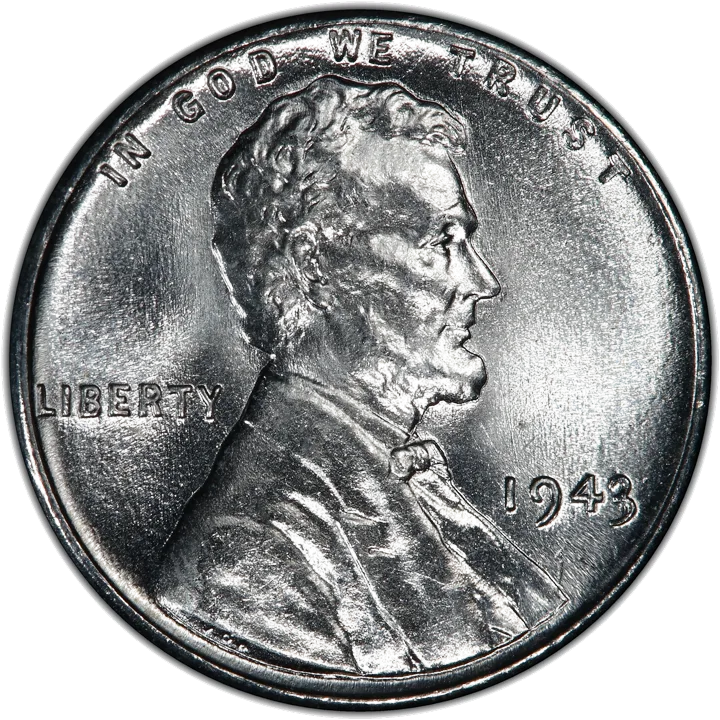
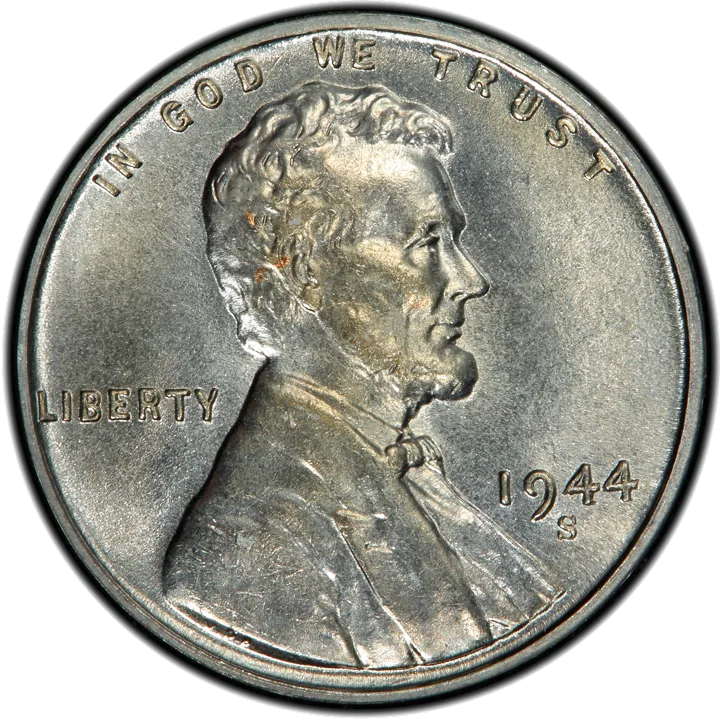
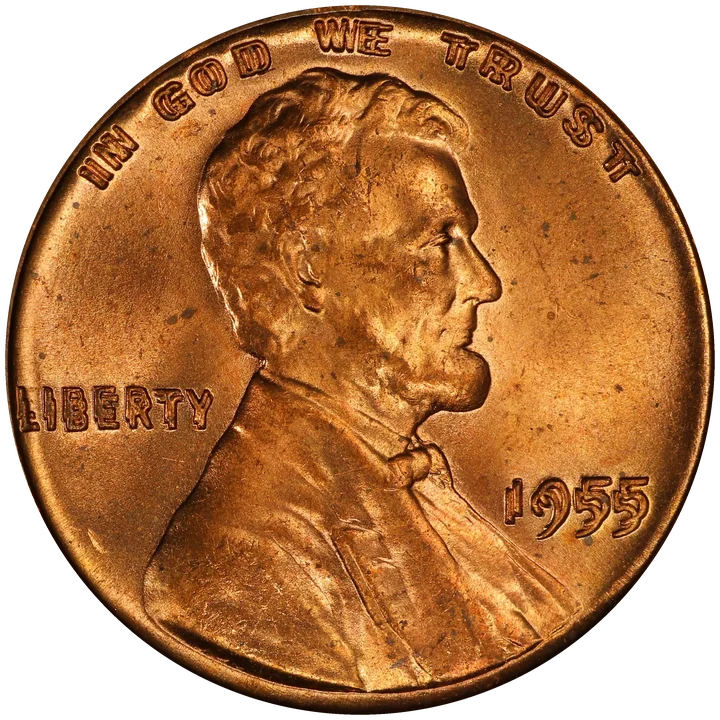
- Year and mints
- 1943: Philadelphia (no mark), Denver (D), San Francisco (S)
- What’s different
- Struck on a leftover bronze blank instead of steel
- Known today
- About 20 to 25 confirmed: 17 P, 7 S, 1 D in the newest census
- Magnet test
- Copper: no pull · normal 1943 steel: sticks
- Weight
- Bronze about 3.11 g · steel about 2.70 g
- Official mintage
- None: every one is a mistake
The story
In 1943 the Mint made pennies out of zinc-coated steel because copper was needed for World War II.
A few bronze blanks left over from 1942 were still in the machines and got struck with 1943 dies. That’s the widely accepted explanation, though some researchers think a few were made on purpose.
A 14-year-old found one in change in California in 1944, and a 16-year-old got one in his school cafeteria change in Massachusetts in 1947. The Mint at first denied such coins existed. The cafeteria coin sold for $204,000 in 2019.
The rumor that Ford would give a new car for one was never true. The only 1943-D bronze cent sold privately for $1.7 million in 2010, with the proceeds going to charity.
Questions people ask
How much is a 1943 copper penny worth?
Real ones sell for six figures in any condition: $186,000 for an XF45 (Heritage, 2019), $264,000 to $312,000 for AU55 (Heritage, 2025), $456,000 for a 1943-S AU55 (Stack’s Bowers, 2026), and $840,000 for the only 1943-D (Heritage, 2021).
How many 1943 copper pennies are there?
About 20 to 25 are confirmed. The newest census counts 17 from Philadelphia, 7 from San Francisco and 1 from Denver. The US Mint has said about 40 copper-alloy 1943 cents exist.
How do I know if my 1943 penny is copper?
Try a magnet. If it sticks, it’s steel, not copper. If it doesn’t stick, check the date for alteration and have it authenticated.
Did Ford give a car for a 1943 copper penny?
No. That widely circulated claim was never true.
Is there a 1943-D copper penny?
Yes, exactly one. It’s graded PCGS MS64 Brown, sold privately for $1.7 million in 2010 and at auction for $840,000 in 2021.