- Year and mints
- 1943: Philadelphia (no mark), Denver (D), San Francisco (S)
- Made
- 1,093,838,670 across all three mints
- Metal
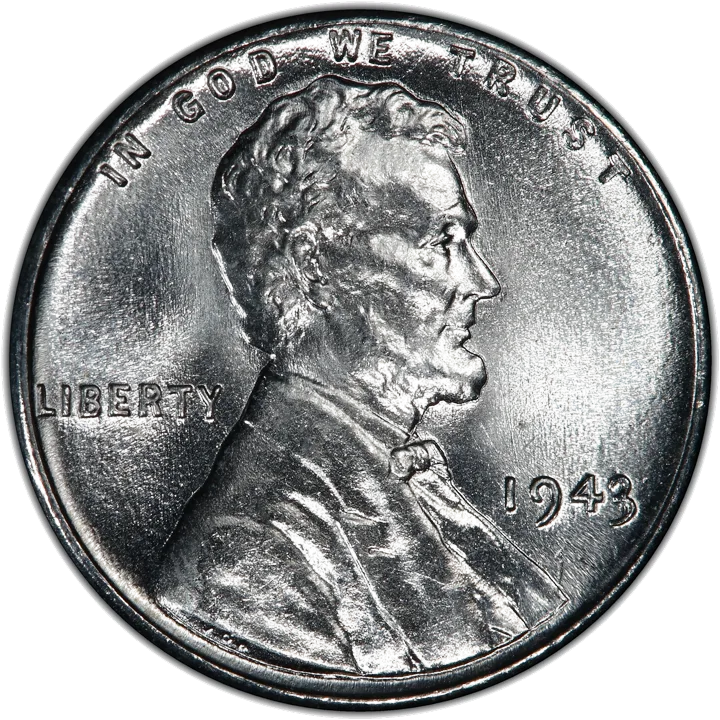
- Steel with a thin zinc coating · magnetic · no silver
- Weight
- 2.70 g (copper cents weigh 3.11 g)
- Why steel
- Copper was needed for World War II
- Grading numbers
- PCGS #2711 (P), #2714 (D), #2717 (S)
The story
Copper was needed for ammunition and war equipment in World War II, so the Mint struck 1943 pennies in zinc-coated steel. It’s the only regular US circulating coin with no copper in it.
People mixed the new cents up with dimes, and vending machines with magnets meant to catch steel slugs caught them too.
The blanks were punched from zinc-coated steel, which left the edges bare, so the coins rusted easily in people’s pockets.
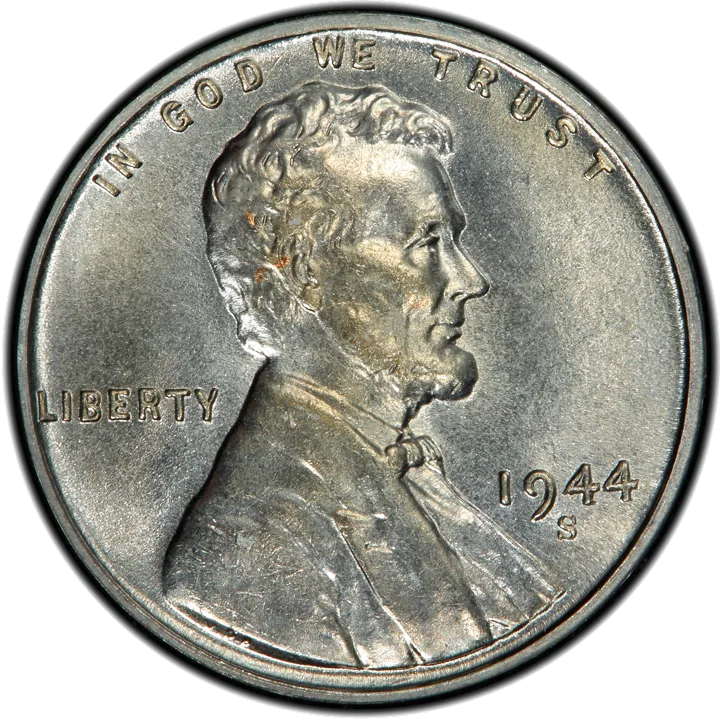
For 1944 the Mint went back to a copper alloy, made partly from salvaged brass shell casings, and later pulled many steel cents out of circulation and destroyed them. Over a billion were made, so ordinary ones are still common.
Questions people ask
How much is a 1943 steel penny worth?
Most worn ones are worth a few cents to a few dollars. Certified MS66 coins sell for about $20 to $80, near-perfect MS68+ coins for thousands, and the record for a regular steel cent is $33,600 (PCGS MS68+ CAC, Stack’s Bowers, 2020).
Is a 1943 penny silver?
No. It’s steel with a thin zinc coating, which makes it look silvery. It contains no silver and no copper.
Why does my 1943 penny stick to a magnet?
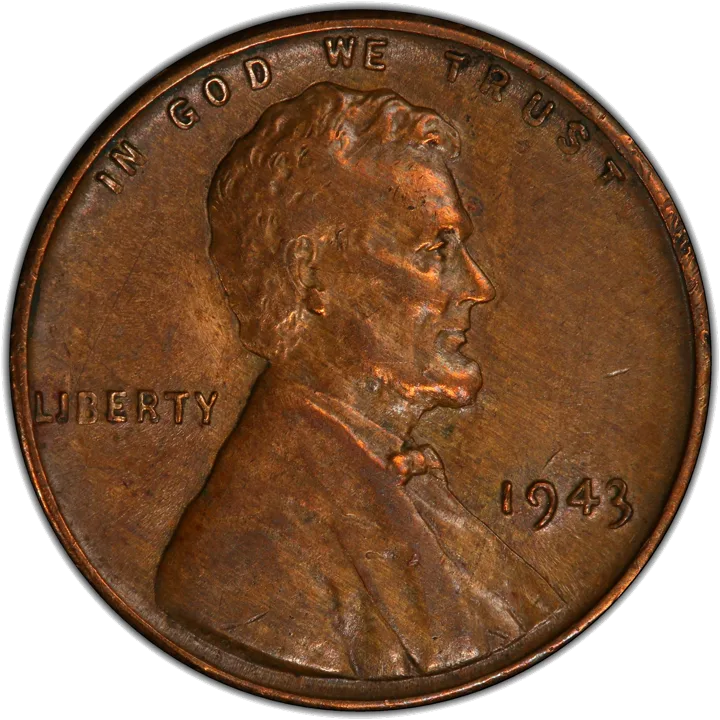
Because it’s steel, like almost every 1943 penny. A 1943 cent that does not stick may be the rare copper error and should be authenticated.
Why is my 1943 penny rusty?
The zinc coating covered only the faces, not the edge, so the steel underneath rusts easily.
My 1943 penny is very shiny. Is it valuable?
Probably not. Many were stripped and re-plated to look new. These are altered coins that collectors value little, and NGC won’t certify them.