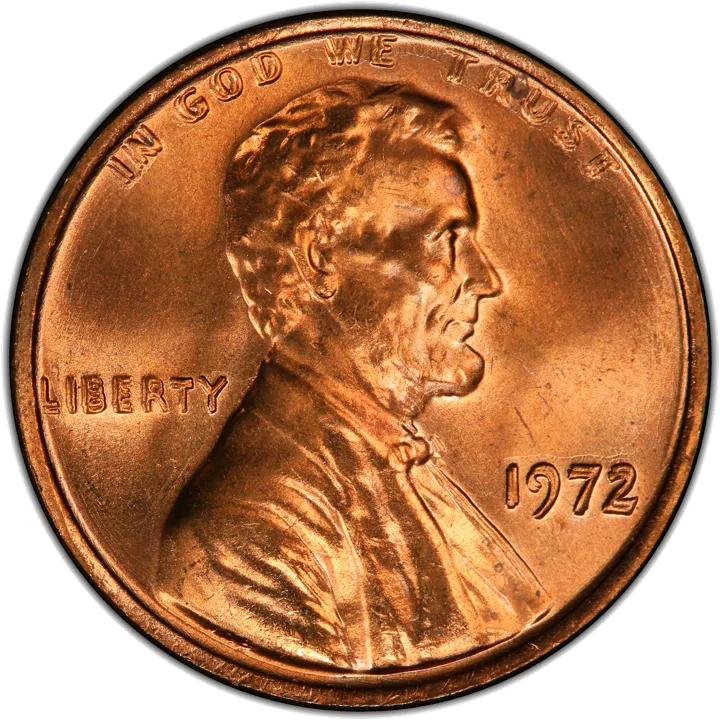
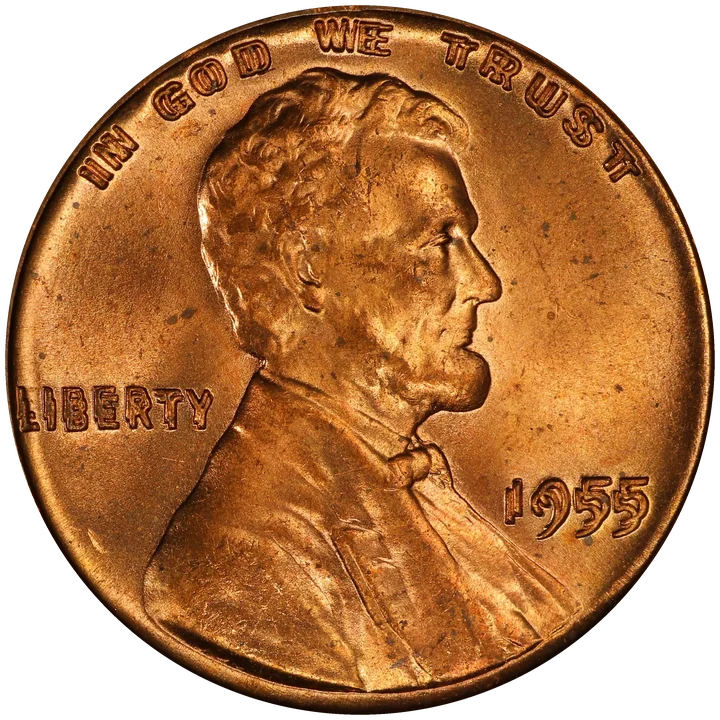
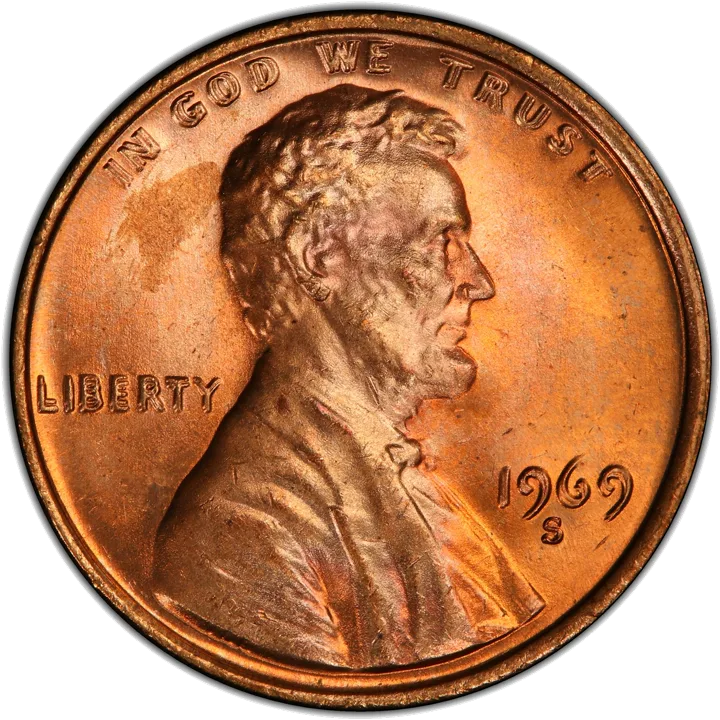
- Year and mint
- 1972, Philadelphia (no mint mark)
- What’s different
- Doubled date, LIBERTY, IN GOD WE TRUST and bust
- How many
- No official count; estimates run from about 20,000 to 75,000 released
- Out of
- 2,933,255,000 Philadelphia cents in 1972
- Variety
- FS-101 · WDDO-001 · PCGS #2950
- Metal
- 95% copper, 5% zinc
The story
In 1972 one of the Philadelphia Mint’s working dies for the cent was made with a doubled, slightly rotated image, so every coin it struck came out with a doubled date and lettering.
Collectors had confirmed the first ones by July 1972. Most turned up in Indiana and Pennsylvania, and by August dealers were already trading them over teletype.
It’s one of the few doubled-die cents you can see plainly without a magnifier, and PCGS calls it one of the major varieties of the whole Lincoln cent series.
Because so many were pulled from circulation fresh, uncirculated ones are easy to find. Truly perfect ones are not: fewer than 10 had graded MS67+ or better by 2021.
Questions people ask
How much is a 1972 doubled die penny worth?
Worn ones sold for $198 (AU50) and $317 (AU58) at Heritage in 2025 and 2026. Uncirculated ones sold for about $450 to $1,150 (MS63 to MS66). The record is $14,400 for an MS67+ Red in 2019.
How do I know if my 1972 penny is a doubled die?
The date, LIBERTY and IN GOD WE TRUST all show strong, clearly separated doubling you can see without a magnifier. Faint doubling on the motto alone is the common kind and has no premium.
How many 1972 doubled die pennies were made?
There’s no official count. Estimates range from about 20,000 to 75,000 released, and a few thousand may survive.
Does a 1972-D doubled die penny exist?
The famous doubled die (FS-101) is a Philadelphia coin with no mint mark. A 1972-D with doubling is not the valuable one.