AnyCoins logoAnyCoins

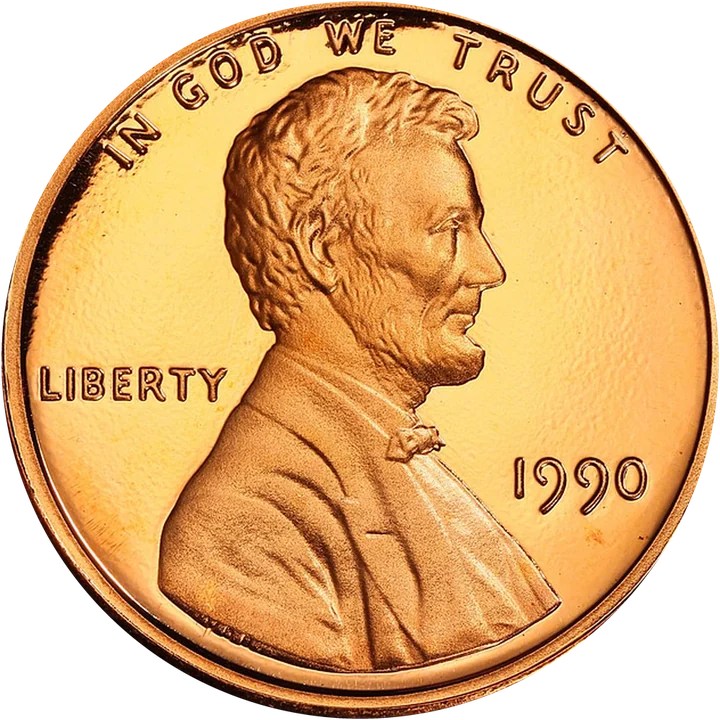
Lincoln cent · 1990 · San Francisco proof

1990 No S Penny: What It’s Worth and How to Check Yours

A real 1990 No S proof penny sold for $2,040 (PR66) in November 2025 and $7,200 (PR69) in August 2025 at Heritage. The record is $20,700. Fewer than 200 are known, and they turn up in old 1990 proof sets, not in change: a mirror-finish proof cent with no S under the date.

Updated October 22, 2026 · 6 sources

Scan your coin with AnyCoinsFree on iPhone · first 3 appraisals on us
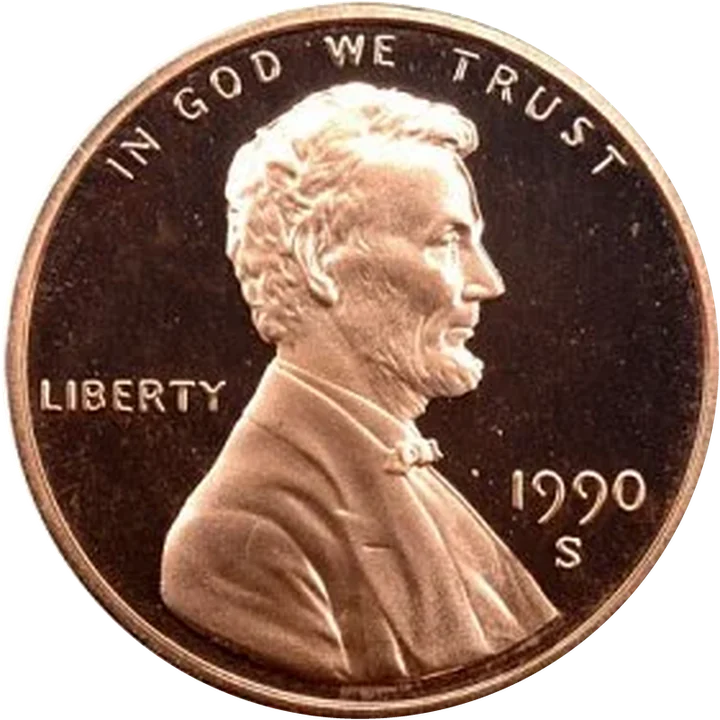
A 1990 proof Lincoln cent with no S mint mark under the date
A 1990 No S proof cent
Year and mint
1990, struck as a proof at San Francisco
What’s missing
The S mint mark under the date
Known today
Fewer than 200 (PCGS)
Struck
About 3,700 by one die (an estimate); the Mint destroyed 145
Variety
FS-101 · PCGS #93506 · No. 9 in PCGS’s Top 100 Modern Coins
Metal
Copper-plated zinc (97.5% zinc)

What it’s worth

Every No S cent is a proof, so they’re graded PR (proof) instead of MS. These are real auction results including the buyer’s premium. Deep Cameo (DCAM) and Ultra Cameo mean frosted letters on mirror fields, which almost all of them have.

ConditionPriceSale
PR63 Red Ultra Cameo (NGC)$1,860Heritage, September 2020 · source
PR66 Red Deep Cameo (PCGS)$2,040Heritage, November 2025 · source
PR68 Red Deep Cameo (PCGS)$3,120Heritage, November 2024 · source
PR67 Red Deep Cameo (PCGS)$3,600Heritage, April 2023 · source
PR69 Red Ultra Cameo (NGC)$4,080Heritage, January 2024 · source
PR69 Red Deep Cameo (PCGS)$7,200Heritage, August 2025 · source
$20,700The record: PCGS PR69 Deep Cameo, Bowers and Merena, August 4, 2007 · source

Prices for the same grade swing a lot (two PCGS PR69 coins brought $4,560 and $7,200 in summer 2025), so check several recent sales before you sell. CPG’s current retail guide lists PR69 Red Deep Cameo at $6,000.

How to tell if you have one

  1. Check the date says 1990 and the coin is a proof: mirror-like flat areas with frosted, raised letters and portrait. Proofs came in 1990 proof sets and Prestige proof sets, never in change.
  2. Look just below the date. Every other 1990 proof cent has a small S there for San Francisco. On the No S coin that spot is plain mirror.
  3. Use a magnifier. The S on a normal proof is small, and a speck of haze can hide it.
  4. If it’s a proof with no S, don’t take it out of its holder and have it certified by PCGS or NGC before selling. Certified coins are labeled “No S” and FS-101.
1990 No S proof cent: nothing under the date
No S. Mirror field under the date, no mint mark.
A normal 1990-S proof cent with an S under the date
Normal 1990-S proof. A small S under the date.

Coins that fool people

An ordinary 1990 penny

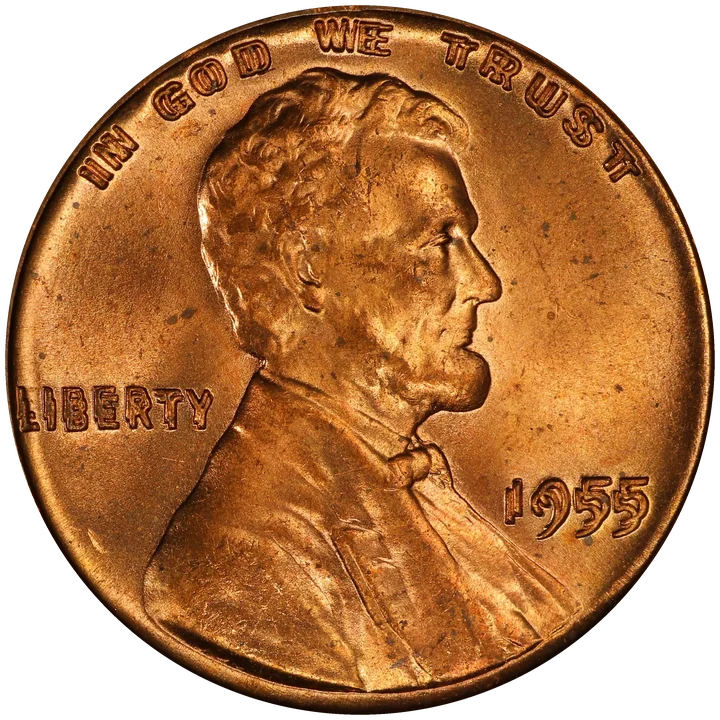
Philadelphia never puts a P on cents, so millions of 1990 pennies have no letter under the date. Those are everyday coins with a satin or worn finish. Only a mirror proof with no S is the rare one.

A normal 1990-S proof

Same mirror finish, but with a small S below the date. Check closely: the S is small.

A proof with the S removed

Any raw coin claimed to be a No S should be treated as unconfirmed until PCGS or NGC certifies it.

The story

Since 1985 the Mint had put the S right into the master die for proof coins, so nobody had to punch it into each die by hand. That made a missing S almost impossible.

In 1990 a die made for everyday Philadelphia cents, which carry no mint mark, was processed as a proof die anyway. It was chrome-plated, polished and sandblasted, and several workers handled it without noticing. Then it was shipped to San Francisco with the real proof dies.

PCGS says the first one was found on July 18, 1990, by a collector in New York. The Mint said it found and destroyed 145 of the coins, but the rest had already gone out in proof sets.

Fewer than 200 have been found since, and PCGS calls it the only proof Lincoln cent missing its mint mark. They still turn up: around 2013 a Florida collector found one in a box of mixed proof sets he had stored for more than 20 years.

Got old proof sets? Check every 1990.

The No S cent hides in plain sight in 1990 proof sets bought from the Mint and forgotten in drawers. Scan the cent and AnyCoins tells you what you have.

  1. Photograph the 1990 proof cent through its holder, heads side first, in good light.
  2. AnyCoins identifies the coin and checks it for known errors and varieties, including the missing S.
  3. You see what it is, a price range by condition and what the same coin has sold for.
Download on the App Store

Why collectors use AnyCoins

  • Photograph both sides and it names the coin: country, year, mint and denomination.
  • Values from real sales: a price range by condition and recent sales of the same coin, not a guess.
  • A condition estimate from your photos, so you know which row of the price table you’re in.
  • Checks the coin for known errors and varieties, the kind that turn a cent into thousands.
  • Melt value for silver and gold, and the mint that struck it on the Mint Map.

Questions people ask

How much is a 1990 No S penny worth?

Recent Heritage sales ran from $2,040 (PR66, November 2025) to $7,200 (PR69, August 2025). The record is $20,700, set in 2007.

Is my 1990 penny with no mint mark worth money?

Only if it’s a mirror-finish proof from a 1990 proof set. Everyday 1990 pennies from Philadelphia have no mint mark by design.

How many 1990 No S pennies are there?

Fewer than 200 are known, according to PCGS. About 3,700 may have been struck, and the Mint destroyed 145 of them.

Where are 1990 No S pennies found?

In 1990 proof sets and 1990 Prestige proof sets, which collectors bought from the Mint. Most have turned up in Prestige sets.

Sources

  1. Numismatic News: Collector strikes it rich with “No S” (Ken Potter, 2017)
  2. NGC Collectors Society: Hey, where did that mintmark go? (quoting Garrett and Schechter, 100 Greatest US Modern Coins)
  3. Greysheet / CPG: 1990 No S proof cent, auction results and guide values
  4. PCGS CoinFacts: 1990 1C No S, DCAM (#93506)
  5. PCGS Top 100 Modern Coins: No. 9, 1990 No S Proof Lincoln Cent
  6. US Mint: Mint marks

Prices are public auction results including the buyer’s premium unless marked as a price guide. A coin’s value depends on its exact condition and on having it certified by a grading service such as PCGS or NGC.